• Skip to primary navigation
  • Skip to content
  • Skip to primary sidebar
  • Skip to footer

We Made a Difference. We Made it Together. WEMADEIT.

  • About WEMADEIT
    • Donor
    • Partners
      • Toronto Metropolitan University
      • Ontario Tech University
      • University of Waterloo
      • Western University
  • For Students
    • Blog
    • Getting There
      • Engineering Disciplines
      • Student Life
      • Where Can I Study?
      • What You Don’t Know About Engineering
      • ENG BLING
    • Black Students
    • Indigenous Students
    • 2SLGBTQIA+ Students
    • Women and Girls
  • For Parents
    • Where Can You Study Engineering?
    • What is Engineering?
  • For Undergrads
    • Gaining work experience
    • Peer Mentorship
    • One Awards
    • Next Generation in Power
    • New Grad Program
  • For Teachers
    • Teacher Resources
  • Getting Involved
  • Contact Us
    • Newsletter Signup

engHEROES

Superheros are not just cartoons, they’re real people too! From rocket scientist to entrepreneur, our team interviewed some of the most incredible female engineers out there. Check out these engHEROES’ stories for some serious inspiration.

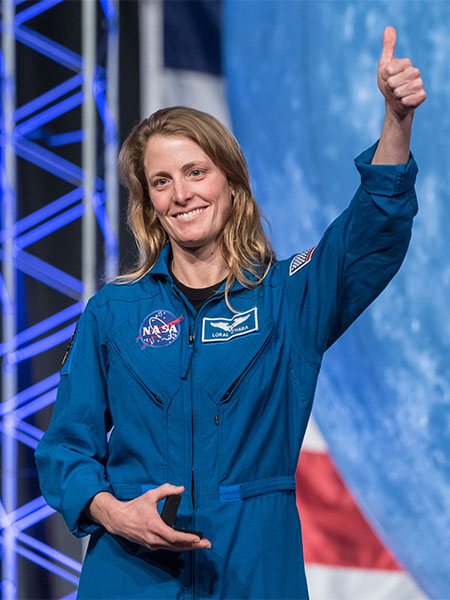
Advice from a NASA Astronaut

by wemadeit

Advice from a NASA Astronaut
Photographer: James Blair

Before Loral O’Hara became a NASA Astronaut, she was an Aerospace Engineering graduate from the University of Kansas. In a Zoom meeting with STEM-field students, Loral gave these three pieces of advice for finding their success.

Lean on your community.

When she was asked for advice on overcoming challenging coursework, Loral recommended to ‘lean on your community’ and the support systems around you. These are the people who know you and your potential, and will help to build your confidence when you face obstacles.

She also suggested to visualize instances in the past when you faced a challenge, and overcame it.  “When I get to a really hard task, I think back to when I struggled and succeeded.”

Be aware of what your own personality is telling you.

Loral is aware that many students struggle to find the right program for them. Her advice is to pay attention to the things that interest you and what you find exciting.  She says that it is all about “being aware of what your own personality is telling you, what skill sets you’re developing, what things you’re drawn to — and how you might be able to best serve the world, the community, your school, whatever, just by being you.”

There is no one path to success.

Being a part of NASA, Loral sees firsthand how a team of diverse backgrounds is necessary to producing the best work. The path to achieving your goals is not ‘one size fits all’, and will look completely different for everyone. “This is one of my favorite things about the astronaut office,” Loral says, “It shows that there’s no one path to success.” She also shares that “the best science and math is done by diverse teams.”


Adapted from: Source
Filed Under: #shareABLE, engHEROES, engSPIRATIONAL, Journeys

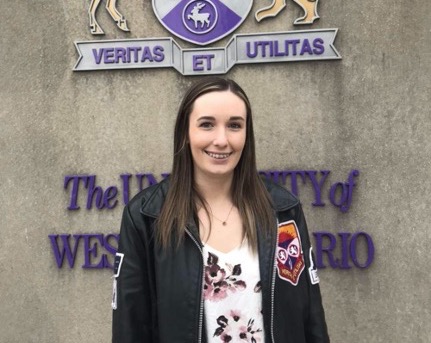
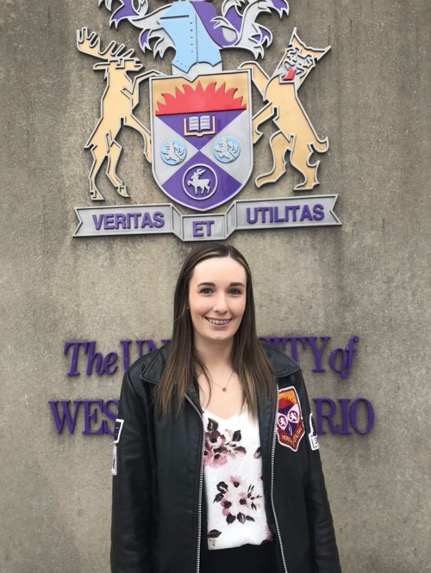
engHERO: Abbey Slawich

by wemadeit

engHERO: Abbey Slawich

What is one thing you wish you knew about engineering when you were in high school?

I remember going to university open houses and seeing these elaborate design projects that engineering students have made, and I would think to myself, I could never figure out how to make something like that. But now I know that I can figure out how to make those elaborate design. You can build that robot, or concrete canoe, or solar car, or whatever project you put your mind to. Engineering will teach you how to apply what you are learning in class and use this knowledge to work on a team to solve problems, design, and let your creativity run wild. So, I guess what I wish I knew in high school is simply just “yes you can!”

What made you want to pursue engineering? 

For as long as I can remember I have enjoyed math, science and figuring out how things work. When looking at university programs, engineering seemed like a faculty that would meet my interests and one that I would very much enjoy. I also like to see the bigger picture as to why I am learning something, and engineering gives you that because you are constantly applying what you are learning in your classes to solve problems and create design projects.

What branch of engineering is your major and how did you decide on it?

I am studying electrical engineering. The reason I decided on electrical was because I really enjoy Physics in first year. The course taught me the basic principles of oscillations, waves, electric fields and potential, DC circuits, magnetic fields, magnetic induction and so much more. In addition, I also found the hands-on lab component of this course interesting. So, it seemed clear that electrical was the right choice for me. However, when I first entered the common first year, I never saw myself pursuing electrical engineering. As a result, I encourage an engineering program with a common first year so that you can explore all your options and figure out what you like.

What do you plan on doing with your engineering degree?

I am currently on a 12-month long work term between the third and fourth academic years, and I am working in electrical reliability. I really enjoy working with industrial power systems, but power distribution is something I would like to learn more about. I am searching for a career that offers learning opportunities, growth and development, leadership opportunities, support for women in engineering, that supports and encourages women to pursue engineering in a field in which they are underrepresented. Through my education and work term experience, I am confident that I will find a post grad career that I love.

What advice would you give to a young female who is considering the field of engineering, but isn’t sure if it’s right for them?

There are so many possibilities when you are studying engineering and having an engineering degree opens doors to a lot of different career opportunities. Since there are so many disciplines to choose from, and many engineering clubs and teams to be apart of, you are bound to find something that is for you.

Something that helped me realize that engineering was, in fact, the right program for me was that I attended some events at Western University for female high school students interested in studying engineering. These programs showed me what engineering is all about and the hands-on activities taught me that engineering is something that I can succeed in. Not only are these programs great for your confidence but they also answer any uncertainties you may have about engineering. I highly recommend looking into attending events, such as Go ENG Girl , to give you a taste of what engineering really is all about.

Filed Under: #shareABLE, engHEROES, engSPIRATIONAL

engHero: Dr. Kizzmekia S. Corbett

by wemadeit

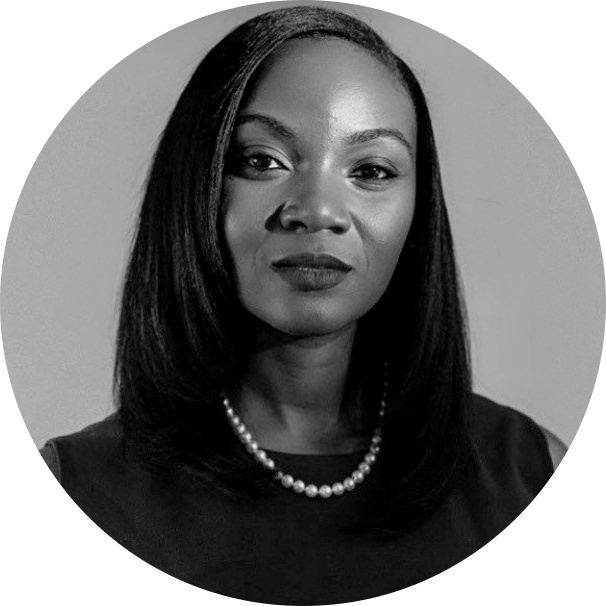
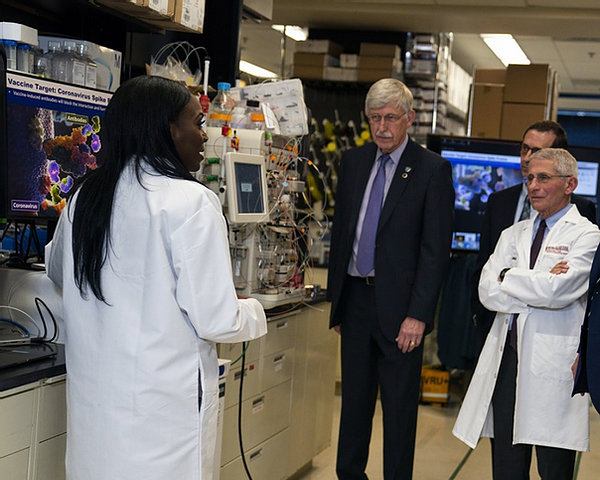
engHero: Dr. Kizzmekia S. Corbett
photo: https://www.humanvaccinesproject.org/event/november-5th-speaker-kizzmekia-corbett/

We’d like to shed light on a key contributor to the race to find an effective vaccine for the infamous Coronavirus. Dr. Kizzmekia S. Corbett isn’t just someone that should be recognized in February, but every time a vaccine is mentioned.

“ The vaccine you are going to be taking was developed by an African American woman, and that is just a fact,” Dr. Anthony Fauci, head of the National Institute of Allergy and Infectious Diseases at the National Institutes of Health, stated.

She sparked an interest in science at a young age, but couldn’t possibly foresee the difference her contribution would make. She attended the University of Maryland- Baltimore County as a Meyerhoff scholar, a mentorship program for STEM students. She received a Bachelor of Science in Biological Sciences, while also majoring in Sociology.

Dr. Freeman Hrabowski, the president of the University of Maryland, caught a glimpse of her raw talent early on and stated that he knew she going to make it upon meeting her.

Later she obtained her Ph.D. in Microbiology and Immunology at the University of North Carolina at Chapel Hill in 2014.

photo: https://our-vaccine.org/dr-kizzmekia-corbett/

Corbett currently works as a research fellow and serves as the scientific lead for the Coronavirus Vaccines & Immunopathogenesis Team at the NIH (National Institute of Health). Her team worked to develop the Coronavirus vaccine utilized by Moderna. More specifically, her work is credited for developing the mRNA-1273 vaccine, the most used vaccine against the virus.

Dr. Kizzmekia S. Corbett always had a strong background in science, but it was her ability to communicate with others that set her apart from her peers. Aside from her research, Dr. Corbett is a dedicated advocator of STEM education and vaccine awareness in her community.

The COVID-19 pandemic has brought much sadness to us all, but we have Dr. Kizzmekia S. Corbett to thank for bringing us one step closer to the end of this pandemic.


Filed Under: #shareABLE, engHEROES, Engineering Disciplines, engSPIRATIONAL, Journeys

engHERO: Michelle Moxley-Peltier

by wemadeit

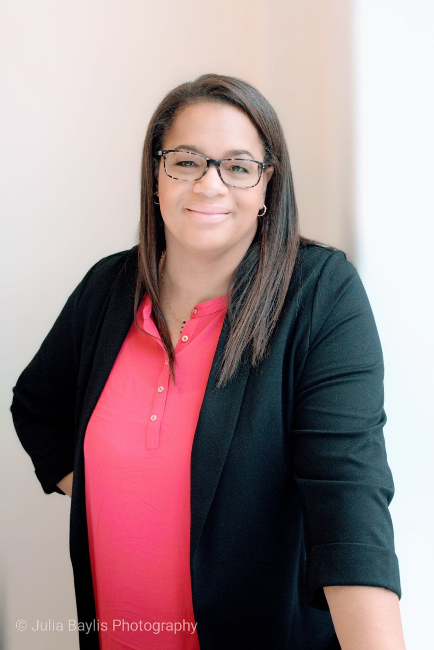
engHERO: Michelle Moxley-Peltier

What is one thing you wish you knew about engineering when you were in high school?

I wish that I knew how complex and multifaceted engineering was, and how most problems are solved in group settings.  When I was in high school, I assumed that I would need to know how to do everything myself as I would work independently. Although there is independent work required, the ability to communicate, collaborate, and delegate are also important.  You don’t have to know how to do everything, but you do need to know what you need to accomplish, how to communicate it, and who you can call on for assistance.

What piece of advice would I give my high school self?

I would tell my high school self to relax and be kind to yourself.  Much of the pressure (stress) I will face in the future is the pressure (stress) I place on myself. 

There won’t be enough time in the day to do everything perfectly.  Prioritization, time-management, and delegation will be your friend.  Understand that you will not be able to physically do everything on your own. 

There will be areas of study that baffle and confuse you.  Be open to networking with others who can provide a different perspective and are willing to share their knowledge and expertise.  The people you connect with in university and in the workforce can become life-long friends.

What made you want to pursue engineering?

I was a curious and mischievous child.  From the time I could walk, I would find new and interesting ways to get into things (trouble was my nickname).  I grew up fascinated with electrical cords, lights, and appliances.  I was the kid who chewed on electrical cords, thought Christmas tree lights were edible, stuck hairpins and paperclips into electrical sockets, and took apart things (while they were plugged in) to see how they worked.  Fortunately, my father, an industrial electrician was able to redirect my focus away from electrocuting myself and setting the house on fire.  He’d let me help (aka hinder) him as he performed household maintenance tasks.  He taught me the fundamentals of electricity and electrical safety.  Through our interactions, my father shared his love of his profession, his ability to perform algebra and trigonometry in his head (the man’s crazy smart), and his hope that I would take advantage of an opportunity he didn’t have: the opportunity to attend college or university.  I believe this daughter-daddy time greatly influenced my later decision to pursue engineering.

What branch of engineering is your major and how did you decide on it?

I majored in Electrical Engineering and graduated Western in 1997.

Throughout elementary and secondary school, I excelled at math and science.  With my marks, I was encouraged by several teachers and guidance counselors to pursue a career in healthcare as at the time, girls with high marks in math and science became doctors or nurses.  I knew that this wouldn’t be a fit for me, as I faint at the sight of blood, and hate needles.  When I was in grade 11, I took a serious look at my experiences, skills, and interests to try and determine what I wanted to study in university.  I asked myself 3 questions:

  • What am I good at?
  • What motivates and excites me?
  • What is the one thing I want to do?

My answers?

  • I’m good at most subjects but excel at history, math, and physics.
  • Walking through my father’s workplace and seeing robots, CNC machines, and conveyor systems.
  • I want to one day work alongside my father.

I chose Western Engineering primarily because of the common first year program.  When I entered University, I didn’t know if I wanted to become an Electrical or a Mechanical Engineer.  The first-year program, along with the student vehicle teams provided me with the experience and knowledge to make my final decision.

What have you done with your engineering degree?

In the 23 years since graduating from Western, I’ve had a variety of experiences in a number of fields. I’ve worked as an Engineer in Information Technology Services, Automotive Controls, Energy Efficiency, and Utility planning and construction.  With each role, I’ve adapted to changes in function, responsibilities, and technology.   I’ve followed my heart and let my interests and aspirations guide me on my engineering journey.  While not completely electrical in focus, I’ve continued to use aspects of my electrical engineering degree in my current role. 

My greatest accomplishment to date was realizing my high school dream of working alongside my father. I was appointed his acting supervisor (aka boss) and we spent his last day before retirement together.

What advice would you give to a young female who is considering the field of engineering, but isn’t sure if it’s right for them?

Engineering is everywhere.  I like to use the analogy of the “Pick your Own Adventure” books I used to read as a child; the books with different journeys and endings depending on decisions.  I view engineering in the same way.  With the theory and principles learned from engineering, young ladies can pick their own adventure.  No matter what interests, motivates, or inspires you, through engineering you can contribute.  If you can think it, you can do it.  Engineers play important roles in all areas of society.  From the moment we wake up in the morning until we lay down at the end of the day to sleep, aspects of engineering is involved in everything we do.

Is engineering right for you?  I recognize that engineering may not be a fit for everyone.  My advice to young females is to not discount it as an option at an early age.  I recommend resisting the temptation to opt out of math and science in elementary school as these subjects are perceived by girls as being too hard.  Math and science can be challenging, but they can also be extremely rewarding, just stick with it.  Keep in mind that math and science will also open doors to other disciplines.

I’ve met many female engineers, each with unique skills, perspectives, and aspirations.  What unites us is our desire to contribute and make the world a better place, be it designing a longer wear lipstick, the development of new apps and video games, or the constructing roads, dams, and buildings.   We have all chosen to design our own adventure and have used engineering to excel.

Filed Under: #shareABLE, engHEROES, Engineering Disciplines, engSPIRATIONAL Tagged With: electrical, engHERO, engineering, western university

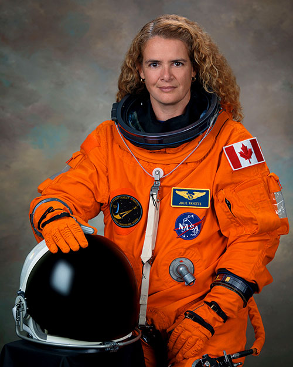
Who is Julie Payette?

by wemadeit

Who is Julie Payette?

Quick facts!

Who: Governor General Julie Payette is an engineer, former NASA astronaut, scientific broadcaster and corporate director.

What: In 1992, Julie was selected for the Canadian Space Agency (CSA) astronaut corps. She was a part of two spaceflights and served as the CAPCOM (Capsule Communicator) for many more. She went on to serve as the CSA’s chief astronaut for seven years.

Where: Julie graduated from McGill University with a degree in Electrical Engineering and from the University of Toronto with a Master’s in Computer Engineering. During Julie’s time in space, she worked on the International Space Station (ISS) and its Mobile Servicing System, now known as the Canadarm2.

When: Julie first visited space in 1999, and was the second ever spaceflight to the ISS. Her second spaceflight was in 2009 on the space shuttle Endeavor. In 2013, Julie retired from the CSA and in 2017, Julie was named the Governor General of Canada where she still serves today.

Julie was first invested into the Order of Canada in 2010, and is a Knight of the Ordre national du Québec. She stands as an inspiration to young girls that their dreams in STEM are within reach and is a role model to aspiring engineers and astronauts everywhere.

Filed Under: #shareABLE, engHEROES, Engineering Disciplines, engSPIRATIONAL, Getting There, Journeys Tagged With: engineering, general, governor, julie, payette

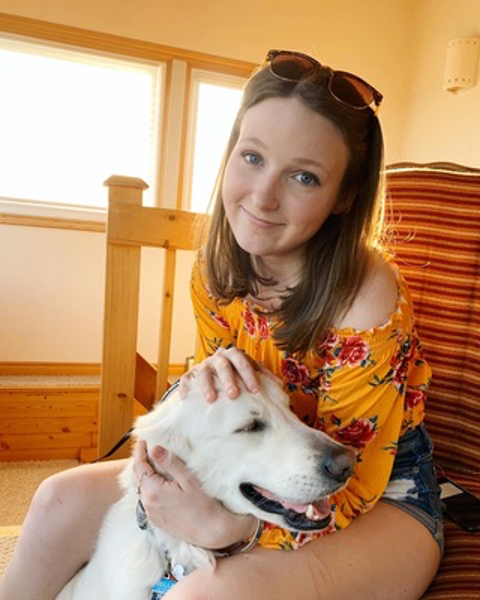
engHERO: Isabel Higgon

by wemadeit

engHERO: Isabel Higgon

What is one thing you wish you knew about engineering when you were in high school?

I wish I knew how diverse the field of Engineering really is. I had a very specific goal in mind when I applied to Engineering. I still have the same goal, but I learned that it’s important to start the program with an open mind, because there are so many exciting paths you can take, and it’s best to take the time to find the one that meets both your interests and personal strengths.

What made you want to pursue engineering?

I am a really creative person, so the idea of being able to work in a field where my job is to create and design useful things that solve problems is so interesting to me. I was also interested in finding a community of peers with similar interests and aspirations. The engineering community is amazing. I have met so many great friends. We all have a lot of fun and keep each other going through hard times like exams!

What branch of engineering is your major and how did you decide on it?

I am in Software Engineering. I took the programming course that all first year students take when I was in grade 12, and I fell in love with coding. There is something amazing about the feeling I get when I run a working program that I created myself, and when I work hard and finally solve a bug in my code to get it working. I also love how diverse software is. You can work in basically any field. Literally almost everything has some sort of code in it. Even things like your refrigerator!

What do you plan on doing with your engineering degree?

I hope to enter the space industry. I have a huge passion for space and I would love to become an astronaut in the future! I am hoping to enrol in a concurrent degree with astrophysics. I have begun a Japanese minor and I would really love to do a semester in Japan. Upon graduation, I hope to work in the space industry and to continue learning to gain more relevant experience in pursuit of my goal!

What advice would you give to a young female who is considering the field of engineering, but isn’t sure if it’s right for them?

I did a number of outreach programs with my university (Western) while I was in high school, and they really helped me learn what engineering was all about. They gave me the opportunity to talk to current students and mentors which helped a lot! I would recommend seeing if there are any programs or open houses at the post secondary institutions you are considering. I learned so much about engineering and the university, as well as many things about student life that weren’t mentioned in the brochures!

Filed Under: #shareABLE, engHEROES, engSPIRATIONAL Tagged With: engHERO, engineering, Software, western university

Next Page »

Primary Sidebar

Categories

  • #shareABLE (70)
  • #surveySAYS (8)
  • engHEROES (50)
  • Engineering Disciplines (35)
  • engSPIRATIONAL (59)
  • Getting There (17)
  • Grade 11 (4)
  • Health (3)
  • Journeys (20)
  • Listen Up (5)
  • listenUp! (2)
  • More2Life (7)
  • Our Favourite Articles (2)
  • Press (3)
  • Recipes (2)
  • Reviews (5)
  • TED talk (17)
  • TheFieldTrip (5)
  • Uncategorized (4)
  • weTHINK (15)

Teacher Login

Register | Lost your password?

Sign Up To Our Newsletter

Footer

Menu

  • About WEMADEIT
    • Donor
    • Partners
      • Toronto Metropolitan University
      • Ontario Tech University
      • University of Waterloo
      • Western University
  • For Students
    • Blog
    • Getting There
      • Engineering Disciplines
      • Student Life
      • Where Can I Study?
      • What You Don’t Know About Engineering
      • ENG BLING
    • Black Students
    • Indigenous Students
    • 2SLGBTQIA+ Students
    • Women and Girls
  • For Parents
    • Where Can You Study Engineering?
    • What is Engineering?
  • For Undergrads
    • Gaining work experience
    • Peer Mentorship
    • One Awards
    • Next Generation in Power
    • New Grad Program
  • For Teachers
    • Teacher Resources
  • Getting Involved
  • Contact Us
    • Newsletter Signup

Search

Teacher Login

Register | Lost your password?

  • Facebook
  • Instagram
  • Twitter

© 2026 · WEMADEIT | Site Design by rtraction